 Search


UK Number Plates Explained
Have you ever wondered what the letters and numbers on a UK licence plate actually mean? Looking to get a fancy new licence plate?
We’ve put together this helpful guide, from how number plates “age” twice a year to the legal rules around fonts and spacing.
Here’s your guide: UK Number Plates Explained: What the Letters, Numbers & Colours Really Mean.
When Were Number Plates Invented?
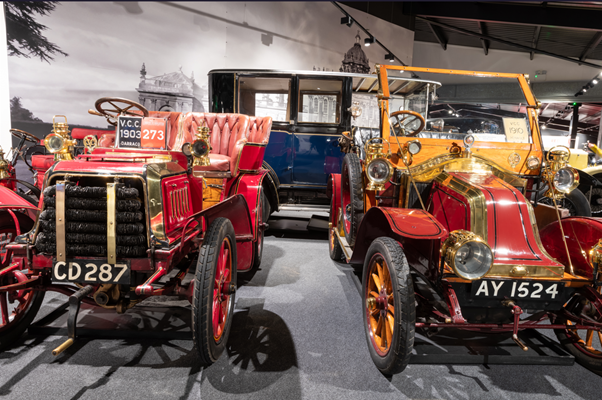
Number plates were first introduced in the UK at the start of the 1900s. By 1903 there were around 5,000 vehicles on the roads, and this started to concern the public. This prompted the introduction of the Motor Car Act 1903. This law made it compulsory for vehicles to display registration marks so they could be easily identified.
The first number plates appeared in 1904 and followed a simple format of one letter and one number, with A 1 issued first in London. As more vehicles took to the roads, authorities quickly used up these combinations and expanded the system to include two letters and up to four numbers.
In 1920, the government introduced the ‘Roads Act’, requiring local councils to register vehicles when they issued a licence. Number plates then started to include letters which indicated where the car was first registered. While this worked well initially, busier areas soon exhausted their available numbers, leading to new formats such as three letters and three numbers, and later reversed versions with numbers first.[1]
How Do UK Number Plates Work?
Since 2001, UK registrations have followed a standard format of 7 numbers and letters. The first 4 are to tell you information and the last 3 are random.
For example: AB26 CDE
Each part has a specific meaning:
1.First Two Letters = Local Area Identifier
The first two letters show where the vehicle was first registered.
- The first letter represents the broader region (e.g. London, South West, Scotland).
- The second letter identifies the specific DVLA office within that region.
For example:
- LA = London
- BX = Birmingham area
- WR = Bristol
- NC = Newcastle
This doesn’t mean the car is still kept there, it’s just where the vehicle was first registered.
Wondering where your car was first registered? You can find all the UK area codes here.
2. Two Numbers = Age Identifier
This is the section that tells you how old the vehicle is. In the UK, this changes twice a year:
- March – The number matches the year
- March 2026 = 26
- September – The number is the year + 50
- September 2026 = 76
So a vehicle registered in:
- April 2024 → 24 plate
- October 2024 → 74 plate
This twice-yearly system is why new cars are sometimes marketed as “new 24 plate” or “new 74 plate”.
So, although you may have purchased a new car in January 2026, this would still be registered under the “75” (October 2025) plates.
Importantly, you cannot legally make a car appear newer with a private plate than it is by fitting a newer age identifier.
The Driver and Vehicle Licensing Agency (DVLA) regulates number plates, and anyone who tries to misrepresent a vehicle’s age faces fines and penalties.
3. Last Three Characters = Random Letters
The final three letters are randomly generated.
They carry no meaning and simply make each registration unique, allowing authorities to trace and identify drivers and vehicles.
What is the Most Expensive Licence Plate in the UK?
Private number plates are symbols of status, individuality, and sometimes an investment. In some cases, rare, short, or meaningful combinations can sell for over £100k, particularly if they spell out a luxury brand or famous name. Additionally, some private plates increase in value over time, especially if they are rare or iconic. However, this is not guaranteed, and high-demand plates may sometimes be sold later through auctions or private sales.
Private plates can be expensive because they are:
- Rare – short letter and number combinations are limited
- Prestigious – plates that spell names or brands are highly desirable
- In Demand – more buyers than available registrations
- Iconic – some are linked to famous cars, brands, or owners
Top 5 Most Expensive Private Plates in the UK
1. 25 O – £518,480
Sold in 2014, this is the most expensive UK plate ever. It has strong links to classic Ferrari 250 models, and a Ferrari dealer bought it to display on a £10 million car.
2. X 1 – £502,500
Auctioned in 2012, this rare single-letter, single-number plate is prized for its simplicity and exclusivity.
3. G 1 – £500,000
Sold in 2011, this plate appeals to buyers with the initial “G” and fans of minimal, high-status registrations.
4. RR 1 – £472,000
Purchased in 2018, this plate is strongly associated with Rolls-Royce, making it a perfect match for the brand’s image.
5. F 1 – £440,625
Bought in 2008, this iconic plate links to Formula One and remains one of the most recognisable registrations in the UK. [2]
What Does the Green Stripe on Number Plates Mean?
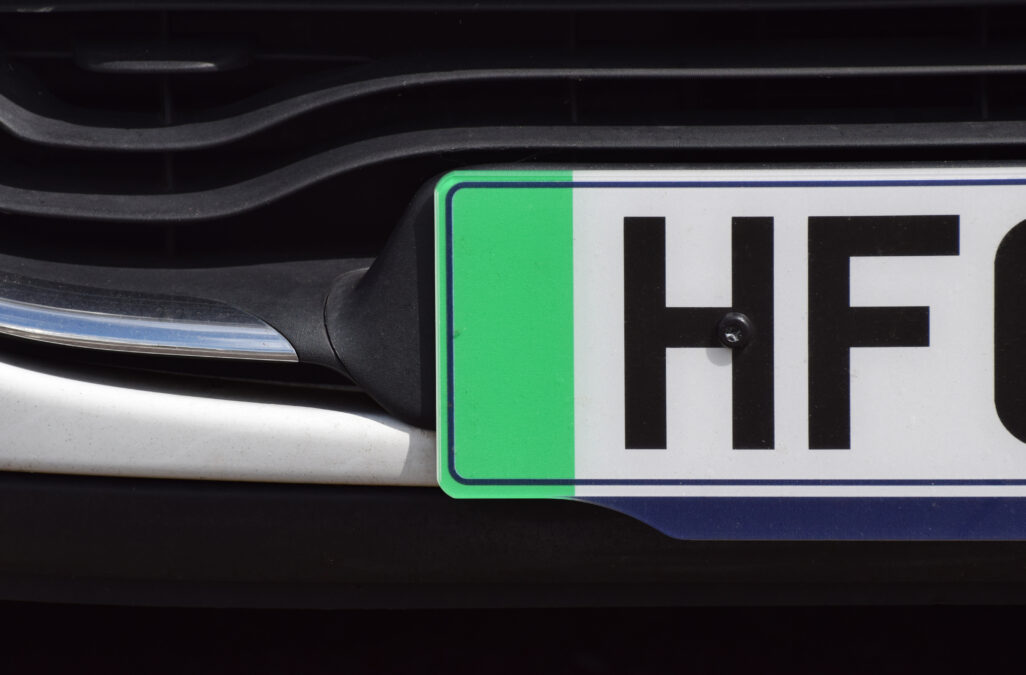
You may have noticed some vehicles displaying a green flash (or green stripe) on the left-hand side of the number plate.
This identifies the vehicle as fully electric (zero-emission at the tailpipe).
Important points about green EV plates:
- They are optional, not mandatory.
- They are only available for fully electric vehicles, not hybrids.
- It can appear alongside a Union Flag, Saltire, Red Dragon or plain GB/UK identifier.
The government introduced the green plate to make electric vehicles more visible and help local authorities identify zero-emission vehicles for potential incentives, such as free parking or clean air zone benefits.
Be aware though, that adding a green flash to a non-eligible vehicle is illegal.
Personalised Number Plates
Are Personalised Number Plates Legal in the UK?
Yes, personalised number plates (also called private registrations or cherished plates) are legal in the UK.
However, strict rules apply.
Under DVLA regulations, you must not:
- Rearrange letters or numbers
- Change spacing to spell a name
- Modify characters with screws or tape
- Use non-standard fonts
- Make a car appear newer than it is
For example:
- A 2018 car cannot legally display a “24” plate.
- You can’t space “AB12 CDE” as “AB1 2CDE” to create a word.
If your plate breaks the rules, you could face:
- A fine of up to £1,000
- An MOT failure
- Withdrawal of your registration number
UK Number Plate Font and Spacing Laws
All standard UK number plates must:
- Use the mandatory ‘Charles Wright’ font
- Display black characters
- Have a white reflective background (on the front plate)
- Have a yellow reflective background (on the rear plate)
- Meet precise spacing measurements
- Show the plate supplier’s name and postcode
- Display the text of the current British Standard – which is ‘BS AU 145e’
While 3D and 4D plates are legal if compliant, many “show plates”, tinted plates, or stylised fonts are not road-legal.
Plates must also be readable by Automatic Number Plate Recognition (ANPR) systems, used by police and enforcement authorities.
If your plate is not clearly readable, you risk breaking the law, even if the difference looks minor.[3]
Can Illegal Number Plates Affect Your Car Insurance?
This is where many drivers make mistakes and get caught out. Having a personalised plate doesn’t usually increase your premium. However driving with illegal number plates can cause problems.
If your vehicle:
- Fails its MOT due to non-compliant plates
- Is stopped and fined
- Is deemed unroadworthy
In the event of a claim, your insurer may argue that your vehicle wasn’t legally compliant at the time of an incident. In serious cases, this could complicate or affect a claim.
It’s extremely important to make sure your number plates fully comply with DVLA regulations.
Need Car Insurance You Can Rely On?
Whether you’re driving a brand-new 26 plate or a cherished private registration, having the right cover matters.
At GoSkippy, we offer straightforward, affordable car insurance designed to keep you moving without the hassle.
Enjoyed this article? Check out our blog on Buying a New Car: 9 Essential Steps to Follow.
Get a quick and easy quote today with GoSkippy.
[1] https://www.nationalnumbers.co.uk/dvla-guide/number-plate-history
[2] https://www.autocapital.co.uk/blog/top-5-most-expensive-private-plates-in-the-uk
[3] Displaying number plates: Rules for number plates – GOV.UK